
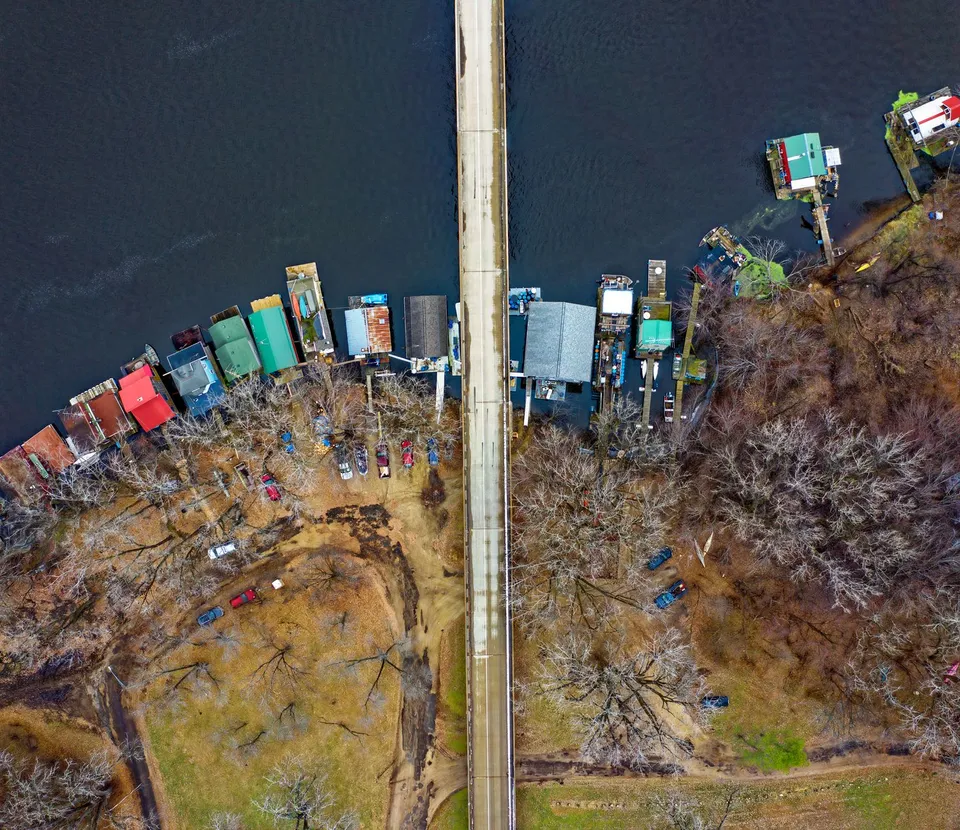
Baudette is easy to miss if you only treat it like a dot on Highway 11, but the city’s public spaces tell a better story. Officially, Baudette sits south of Lake of the Woods at the meeting of Highways 11 and 172, and the city points visitors and residents to three municipal parks: Timber Mill Community Park, Peace Park, and Bay Front Park. That matters because these are not interchangeable green patches. Each one answers a different local need, which is exactly what makes them useful to understand.
Timber Mill: the practical base
Timber Mill Community Park is the place where Baudette gets concrete about staying overnight. The city identifies Timber Mill’s campground as offering RV and primitive camping, which gives the town a modest but meaningful base for people who want to stay close to the river, the lake, or the rest of town without turning every trip into a long drive. That is a real local function, not just a recreation talking point. For a county seat that also serves anglers, travelers, and families moving between errands, a campground inside town simplifies decisions. It helps visitors anchor themselves without losing the sense that they are still in Baudette, not somewhere generic and far away.
Peace Park: the place that explains the border
Peace Park works differently. The city says it is a spot to view Canada and the International Bridge, so it is less about activity and more about orientation. If Timber Mill says, “You can stay here,” Peace Park says, “Here is where you are.” That distinction matters in Baudette, where the border is not an abstract line but part of daily geography. The Rainy River International Bridge was replaced and completed in 2020, and MnDOT’s bridge materials frame it as a major international crossing rather than a minor local span. Seeing the bridge from a public park helps explain why the town’s identity is so tied to movement, access, and the river edge at once.
Peace Park also reinforces a useful local truth: Baudette is not only a place to pass through on the way to somewhere else. It is a place where cross-border geography becomes part of the public landscape. That is a more helpful lens than thinking of the town as simply “near the lake” or “near Canada.” The park turns the border into something people can understand at a glance, which is a rare advantage for a small community.
Bay Front Park: the town’s shared symbol
Bay Front Park is the most recognizable of the three because it is home to Willie the Walleye, Baudette’s local mascot and one of the city’s clearest signs that public spaces here are meant to carry identity as well as traffic. The city’s materials also note Willie Walleye Day each June, which makes the park more than a photo stop: it is part of the town’s civic calendar. In a place where the county seat, the bridge, and seasonal recreation all matter, Bay Front Park gives the community a shared reference point that is easy to recognize and easy to gather around.
That is why Bay Front Park matters even to people who are not there for fishing or festivals. A mascot can sound like a small thing, but in a small town it becomes a shorthand for continuity. Willie the Walleye ties today’s Baudette to a longer public identity built around the lake, the river, and the people who use both. In that sense, the park is not just decorated by the mascot. The mascot helps explain the park.
Why the three parks work best together
The real discovery is not any one park on its own. It is the way the three together sketch the town’s working logic. Timber Mill gives you a place to stay. Peace Park gives you a place to look outward and understand the border. Bay Front Park gives you a place to meet the town’s symbol and its civic rhythm. Together, they show that Baudette’s public spaces are doing practical jobs, not decorative ones. That fits a place whose life is shaped by water, seasonal recreation, and a county seat role that concentrates everyday services in one compact community.
It also fits the broader seasonal pattern around Lake of the Woods. Tourism guidance for the area describes spring and fall Rainy River fishing, summer boating and fishing, and winter ice fishing, which means the town’s public spaces have to work across very different seasons. A park that helps one person camp in July, another person pause by the river in October, and another person celebrate a community tradition in June is doing exactly the kind of flexible work a place like Baudette needs.
If you want to understand Baudette quickly, don’t start with a map legend alone. Start with these three parks and ask what each one is for. The answer says a lot about the town: it is practical, border-aware, and still willing to make its public places carry a little character. For readers looking for life or work in the area, that is a good sign of a community that knows how to organize itself around real needs. If you want to compare local opportunities or discuss a hiring need, you can also call 218-WorkNow or email the office.