
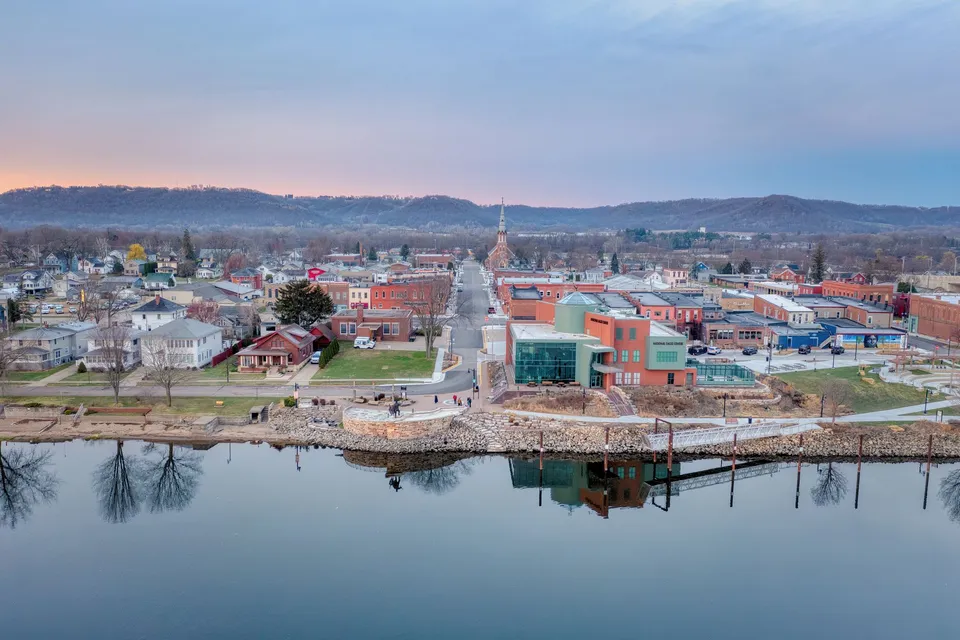
Baudette is easier to understand once you stop looking for one grand center. The city sits south of Lake of the Woods on Highways 11 and 172, and its most useful places each answer a different question: where county business happens, where people camp, where they gather by the water, and where they look across the border. That is why a quick read on Baudette is really a loop through public places, not a hunt for a single landmark.
Start where the town does its business
A good first stop is the Lake of the Woods County Government Center, which is at 206 8th Ave SE in Baudette. The county site shows that many of the practical services residents rely on are centered there: assessor, auditor/treasurer, court administration, emergency management, land and water, recorder, sheriff, public works, and more. It also functions like a live reference point, with a directory, maps, a calendar, and online payment tools. In a small county seat, that concentration matters. It means a lot of ordinary life runs through one place, not through a scattered set of offices you have to hunt down.
That does more than save time. It helps explain why Baudette feels coordinated even when it is small. The town is not built around a sprawling commercial core. It is built around tasks: county paperwork, road information, land questions, local services, and the everyday business that keeps a county seat functioning. For a newcomer, that is useful because it tells you where to start when you have a practical question. For a resident, it explains why so many errands can fit into one short trip.
The parks are not interchangeable
Baudette’s three municipal parks each do a different job. Timber Mill Community Park includes RV and primitive camping, so it serves people who want to stay close to town without turning the trip into a full resort stay. Peace Park is about the view: the city says it offers a look toward Canada and the International Bridge. Bay Front Park is the home of Willie the Walleye, which makes it the most recognizable gathering spot in the city’s public identity.
That separation is the point. Timber Mill is for overnight use. Peace Park is for the border view and a sense of place. Bay Front Park is for the local icon and the everyday civic image Baudette chooses to present. The names are not decorative; they map to different kinds of time. One park is for staying, one is for looking, and one is for meeting the symbol that says, plainly, you are in Baudette.
The river turns one place into four seasons
Baudette’s relation to the water is not limited to summer recreation. Lake of the Woods Tourism describes the Rainy River corridor in seasonal terms: spring and fall fishing, summer boating and fishing, and winter ice fishing. That matters because it shows the same geography supporting very different kinds of visits and routines over the course of a year. The river is not just a scenic edge on the map. It is part of the calendar. Rainy River fishing seasons and boating information
That seasonal variety helps explain why Baudette resists a simple label like “summer town.” Summer is important, but it is not the whole story. People come for different reasons in different months, and the town’s public spaces reflect that. A border view, a campground, and a park named for a famous walleye statue all make sense in a place where water and weather change the way people use town.
The quieter places matter too
One of Baudette’s most revealing civic resources is not a landmark at all, but the Baudette Public Library. Its annual report lists 432 registered users, 8,225 visits, 312 reference transactions, and 778 public internet computer sessions for a legal service area population of 943. Those numbers show a small but real public hub, especially in a community where internet access, reference help, and a place to work through a question can matter as much as checking out a book.
That is the deeper pattern in Baudette: the town’s best clues are places that do useful work. County offices answer official questions. Parks answer the need for camping, views, and local identity. The river answers the seasons. The library answers the quiet, practical needs that do not fit on a postcard. Put together, they show a community that is small enough to navigate quickly and organized enough to feel legible once you know what each place is for.
If you are also looking for work nearby, you can call 218-WorkNow or email the office to ask about verified openings or a hiring need.