
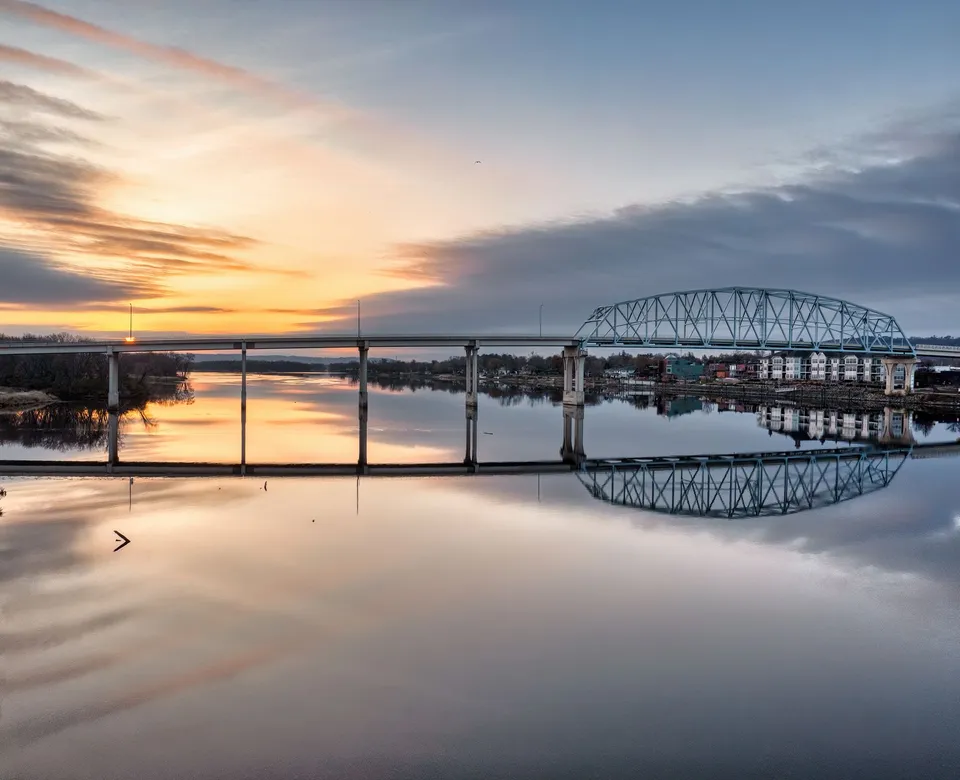
Baudette works best when you stop looking for a single center and start noticing how its important places divide the work. The city describes itself as the Walleye Capital of the World, but that nickname sits on top of a practical map: Baudette is just south of Lake of the Woods on State Highways 11 and 172, and its civic life is spread across parks, the county government center, and the bridge that ties the town to the river crossing.
The bridge is part of daily life, not just a way through town
The Rainy River International Bridge is one reason Baudette feels more connected than its size might suggest. MnDOT identifies it as the crossing on Minnesota Trunk Highway 72 and Ontario Highway 11 between Baudette and Rainy River, Ontario, and the replacement bridge was completed in 2020. A background document says the crossing carried about 1,350 vehicles a day, which helps explain why border access matters here as a routine fact of life, not a special occasion. For residents, that means travel, visitors, and regional errands are shaped by an international roadway link rather than by a single local street.
That matters because Baudette is easy to misread if you only glance at the map. A place with an international bridge, two state highways, and a county seat does not behave like a one-block town. It behaves like a small hub: one part for crossing, one part for county business, and one part for everyday gathering. The bridge is not just transportation infrastructure. It is part of the town’s identity and part of how the region works.
The parks do different jobs on purpose
Baudette’s three municipal parks are worth reading as separate answers to separate questions. Peace Park is the place the city points to for a view of Canada and the International Bridge, which makes it the obvious stop when someone wants to understand the town’s border geography. Bay Front Park is home to Willie the Walleye, so it carries the city’s public image and a more playful sense of place. Timber Mill Community Park adds still another use: the city says its campground offers RV and primitive camping, which makes it useful to people who are staying, not just passing by.
That variety is part of the local story. In some towns, a park is just a park. In Baudette, each one seems to answer a different need: a place to look out, a place to meet the town’s mascot, and a place to camp. That is a small thing, but it tells you something important about how the city thinks about public space. The parks are not ornamental leftovers. They are practical public rooms, and they help explain why the city feels organized rather than scattered.
The county seat is part of the answer to ordinary questions
Another reason Baudette feels more useful than it first appears is that so many county functions are centered there. The Lake of the Woods County government center is at 206 8th Ave SE in Baudette, and the county’s directory shows that many day-to-day services flow through offices there rather than through a separate county campus somewhere else. That includes the kind of work residents and property owners need when the question is not scenic but administrative: records, land and water matters, assessor questions, and other public business.
The city layer and county layer also complement each other. The city provides electric, water, sewer, and refuse service, while the county handles a larger share of administrative functions from the government center. For a newcomer, that split is useful to know early. It means that one call or one office will not solve every problem, but it also means there is a clear place to begin. Baudette is small enough to feel manageable and structured enough to feel legible.
The seasons change what the same places mean
The local recreation calendar changes the way Baudette reads across the year. Lake of the Woods Tourism describes spring and fall Rainy River fishing, summer boating and fishing, and winter ice fishing. Those are not just seasonal activities; they are seasonal frames for the town itself. A road that feels like access in July may feel like a different kind of lifeline in January. A park that serves as a picnic stop in summer may function as a quiet lookout in colder months. The point is that the town’s public places stay important even when the reason for using them changes.
That rhythm helps explain why Baudette resists being summarized as only a fishing town or only a border town. Water matters here in more than one season and for more than one reason. Summer boating, fall fishing, winter ice fishing, and the bridge all point to the same larger idea: the community’s geography keeps creating new uses for the same places. The map does not sit still, and neither does the town’s purpose.
What a newcomer, visitor, or resident can take from all this
If you are new to Baudette, the useful habit is to match the place to the question. Need to cross the river? Think bridge. Need to understand the town’s public identity? Start with the parks. Need paperwork or a county service? Go to the government center. Need to understand why the town changes character with the calendar? Look at the fishing and boating seasons. That is a better way to learn Baudette than trying to memorize a list of attractions.
And if you want a final shorthand, it is this: Baudette is not built around one big destination. It is built around several smaller ones that each do a different job well. That is why the town feels calm, workable, and surprisingly complete once you know where to look. If you are also sorting out work in the area, you can call 218-WorkNow or email the office to ask about verified jobs or a hiring need.